undefined cover
undefined cover
undefined cover
undefined cover
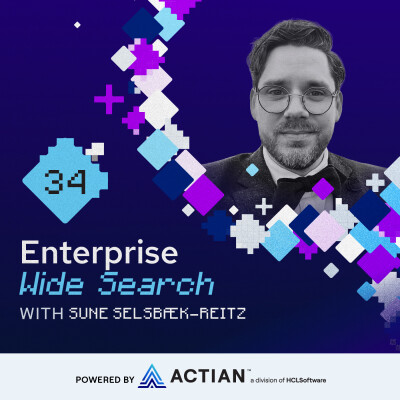
Enterprise Wide Search 34: Sune Selsbæk-Reitz - Promptism and the Fight for Meaning cover
Enterprise Wide Search

Enterprise Wide Search 34: Sune Selsbæk-Reitz - Promptism and the Fight for Meaning

Enterprise Wide Search 34: Sune Selsbæk-Reitz - Promptism and the Fight for Meaning

25min |29/05/2026
Play
undefined cover
undefined cover
undefined cover
undefined cover
Enterprise Wide Search 34: Sune Selsbæk-Reitz - Promptism and the Fight for Meaning cover
Enterprise Wide Search

Enterprise Wide Search 34: Sune Selsbæk-Reitz - Promptism and the Fight for Meaning

Enterprise Wide Search 34: Sune Selsbæk-Reitz - Promptism and the Fight for Meaning

25min |29/05/2026
Play

Description

In this episode, Ole Olesen-Bagneux sits down with Sune Selsbæk-Reitz, Data & AI Strategist at Demant and author of Promptism, for a conversation on how generative AI is reshaping the way humans interact with knowledge, meaning, and decision-making.

Drawing from his background in data strategy, philosophy, history, and writing, Sune explores why the real challenge of AI may not be hallucinations or technical limitations, but the growing tendency to mistake fluency for understanding.

Together, they discuss:

  • Why prompting represents more than a technical skill, and may signal a broader cultural shift

  • How large language models are changing our relationship with knowledge and truth

  • Why “smooth” AI interfaces can weaken critical thinking and human judgment

  • The role of friction, uncertainty, and hesitation in responsible AI design

  • What enterprise leaders must rethink about governance, accountability, and decision-making in the age of generative AI

  • Why humanities-inspired thinking may become increasingly important in AI-driven organizations


The conversation also explores the origins of Sune’s book Promptism, the emerging concept of “ontological design,” and how enterprises can remain thoughtful and responsible while adopting increasingly fluent AI systems.

🎧 Tune in for a philosophical and practical discussion on AI, meaning, human judgment, and what we risk losing when machines start sounding like they understand us.


Hosted on Ausha. See ausha.co/privacy-policy for more information.

Description

In this episode, Ole Olesen-Bagneux sits down with Sune Selsbæk-Reitz, Data & AI Strategist at Demant and author of Promptism, for a conversation on how generative AI is reshaping the way humans interact with knowledge, meaning, and decision-making.

Drawing from his background in data strategy, philosophy, history, and writing, Sune explores why the real challenge of AI may not be hallucinations or technical limitations, but the growing tendency to mistake fluency for understanding.

Together, they discuss:

  • Why prompting represents more than a technical skill, and may signal a broader cultural shift

  • How large language models are changing our relationship with knowledge and truth

  • Why “smooth” AI interfaces can weaken critical thinking and human judgment

  • The role of friction, uncertainty, and hesitation in responsible AI design

  • What enterprise leaders must rethink about governance, accountability, and decision-making in the age of generative AI

  • Why humanities-inspired thinking may become increasingly important in AI-driven organizations


The conversation also explores the origins of Sune’s book Promptism, the emerging concept of “ontological design,” and how enterprises can remain thoughtful and responsible while adopting increasingly fluent AI systems.

🎧 Tune in for a philosophical and practical discussion on AI, meaning, human judgment, and what we risk losing when machines start sounding like they understand us.


Hosted on Ausha. See ausha.co/privacy-policy for more information.

Share

Embed

You may also like

Description

In this episode, Ole Olesen-Bagneux sits down with Sune Selsbæk-Reitz, Data & AI Strategist at Demant and author of Promptism, for a conversation on how generative AI is reshaping the way humans interact with knowledge, meaning, and decision-making.

Drawing from his background in data strategy, philosophy, history, and writing, Sune explores why the real challenge of AI may not be hallucinations or technical limitations, but the growing tendency to mistake fluency for understanding.

Together, they discuss:

  • Why prompting represents more than a technical skill, and may signal a broader cultural shift

  • How large language models are changing our relationship with knowledge and truth

  • Why “smooth” AI interfaces can weaken critical thinking and human judgment

  • The role of friction, uncertainty, and hesitation in responsible AI design

  • What enterprise leaders must rethink about governance, accountability, and decision-making in the age of generative AI

  • Why humanities-inspired thinking may become increasingly important in AI-driven organizations


The conversation also explores the origins of Sune’s book Promptism, the emerging concept of “ontological design,” and how enterprises can remain thoughtful and responsible while adopting increasingly fluent AI systems.

🎧 Tune in for a philosophical and practical discussion on AI, meaning, human judgment, and what we risk losing when machines start sounding like they understand us.


Hosted on Ausha. See ausha.co/privacy-policy for more information.

Description

In this episode, Ole Olesen-Bagneux sits down with Sune Selsbæk-Reitz, Data & AI Strategist at Demant and author of Promptism, for a conversation on how generative AI is reshaping the way humans interact with knowledge, meaning, and decision-making.

Drawing from his background in data strategy, philosophy, history, and writing, Sune explores why the real challenge of AI may not be hallucinations or technical limitations, but the growing tendency to mistake fluency for understanding.

Together, they discuss:

  • Why prompting represents more than a technical skill, and may signal a broader cultural shift

  • How large language models are changing our relationship with knowledge and truth

  • Why “smooth” AI interfaces can weaken critical thinking and human judgment

  • The role of friction, uncertainty, and hesitation in responsible AI design

  • What enterprise leaders must rethink about governance, accountability, and decision-making in the age of generative AI

  • Why humanities-inspired thinking may become increasingly important in AI-driven organizations


The conversation also explores the origins of Sune’s book Promptism, the emerging concept of “ontological design,” and how enterprises can remain thoughtful and responsible while adopting increasingly fluent AI systems.

🎧 Tune in for a philosophical and practical discussion on AI, meaning, human judgment, and what we risk losing when machines start sounding like they understand us.


Hosted on Ausha. See ausha.co/privacy-policy for more information.

Share

Embed

You may also like

undefined cover
undefined cover